
Our Review Method
How We Review Slots: Our Method
How we verify every number before it reaches a page like this one.
What We Check Before We Publish
Every review on this site starts with the provider's own material. For a title like House of Fun, that means the Betsoft game page first, then studio press kits and technical sheets where they exist. If a figure such as RTP, max win, or paylines appears there, we treat it as the baseline. Where the studio stays silent, we say so directly rather than filling the gap with an industry average.
House of Fun is a useful case for this because Betsoft's own page does not list RTP, volatility, or max win. Those figures had to come from independent testing databases and licensed aggregators instead, which is a different tier of source and gets labelled that way in the review itself.
Once we have a working figure, we cross-check it against at least two independent slot databases before it goes into a spec block. For House of Fun, that process landed on an RTP of 94.96% and a hit frequency of 44.52%, both consistent across the sources we track. Volatility comes out as medium, which fits a game built around a single free spins trigger rather than stacked multipliers or a bonus buy.
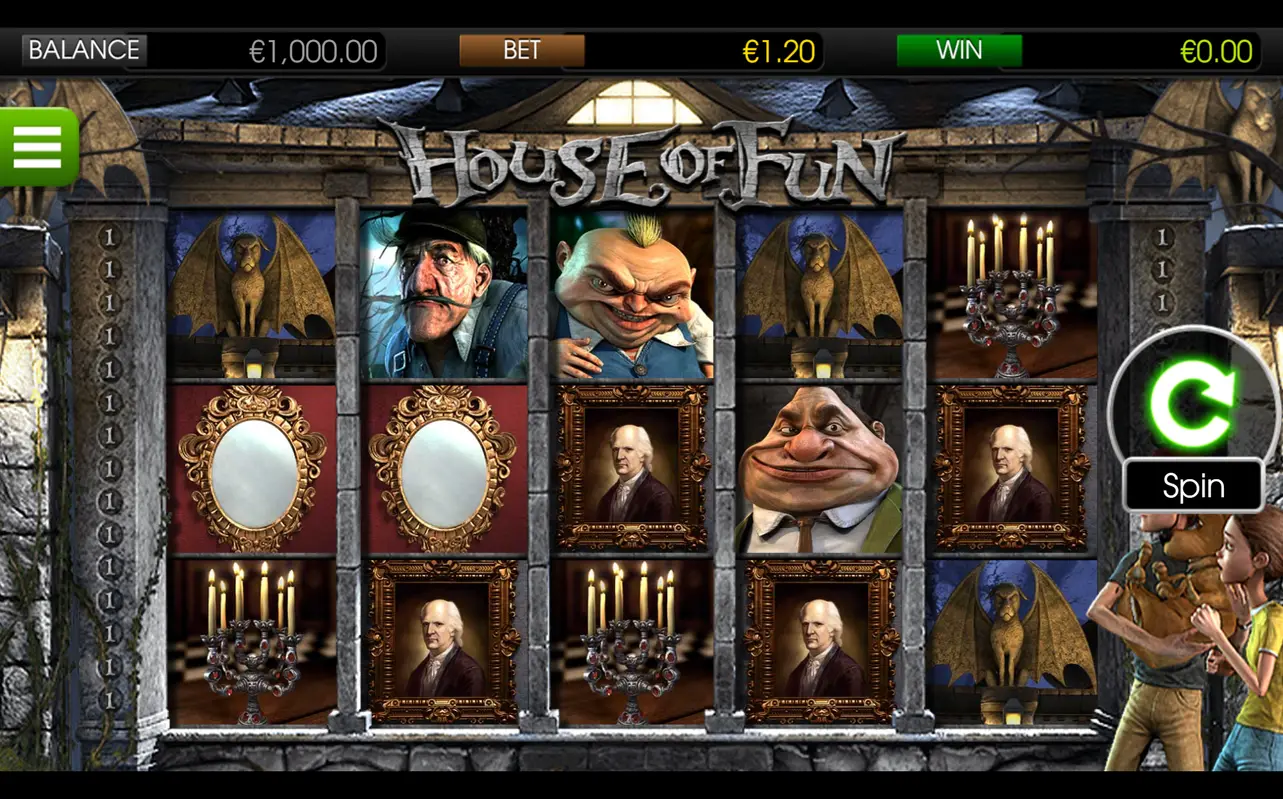
We also test the mechanics ourselves in demo mode where one is available, which it is here. That is how we confirmed the wild only appears on the centre reel during free spins, not in the base game, and that free spins are triggered by three jackbox symbols landing on reels two, three, and four. The Click Me feature and the Escape bonus round were verified the same way, by playing the demo rather than repeating a marketing description.
Handling Conflicting Data
Slot data is not always consistent across the industry, and House of Fun illustrates why. Most third-party sources report 94.96% RTP, but a handful round it to a flat 95%, which is close enough not to matter for play decisions but wide enough that we flag it once rather than let a reader assume the number is disputed everywhere.
Release dates carry the same issue. Betsoft's own page dates House of Fun to December 29, 2011, while some slot databases list August 2011 or even 2009. We use the provider's own date as the primary reference and note the discrepancy only where it is directly relevant, such as a timeline or release-history page.
Naming is another recurring problem specific to this title. House of Fun is also the name of a large, unrelated social casino app, and search results routinely mix the two. Our reviews stay scoped to the Betsoft video slot, and we do not carry over specs, bonus structures, or availability claims from the unrelated app.
Where a figure genuinely cannot be confirmed, such as max win or bonus buy availability for House of Fun, we leave it marked as unconfirmed exactly once in the review, in the specs section where the reader expects it. We do not repeat that caveat across every block on the page, because doing so tells the reader less about the game and more about our own research gaps.
Why the Method Matters
This process exists because a review site is only as useful as the numbers it repeats. A wrong RTP or an invented max win gets caught the moment a reader checks it against the operator's own game information screen, and that erodes trust in everything else on the page. For a title like House of Fun, where the provider itself withholds several core figures, the honest path is to state what independent testing confirms, mark what remains unverified, and stop there rather than guess. This applies across the site regardless of jurisdiction, and for Canadian readers specifically, all real-money play discussed here assumes the applicable minimum age of 19 (18 in Alberta, Manitoba, and Quebec) and a licensed operator.